blog
We will be holding an order event for "MONAKA jewelry" where you can choose your birthstone.


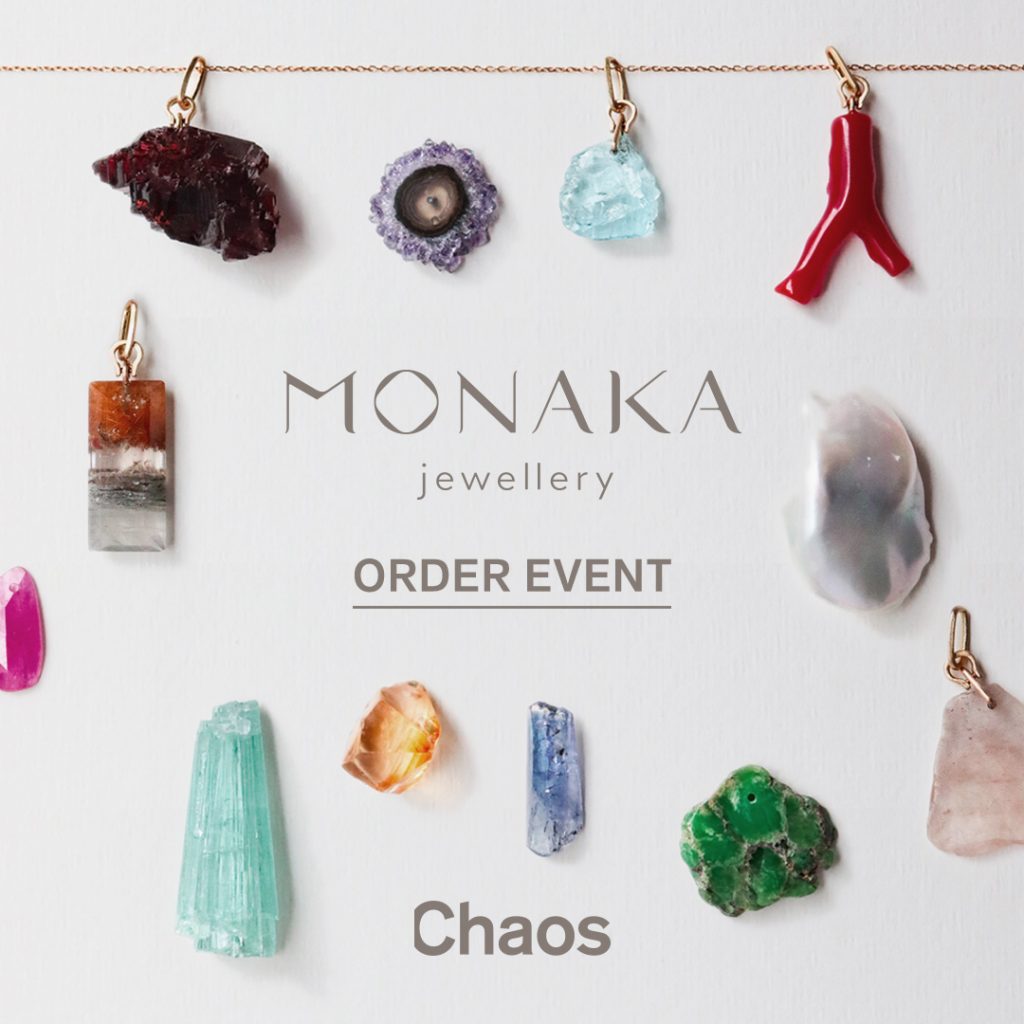
We will be holding an order event for MONAKA jewelry at Chaos Omotesando and Chaos Yokohama, where you can choose your birthstone.
You can select and order your favorite loose stone from a selection of striking natural stones that will overturn your image of birthstone jewelry.
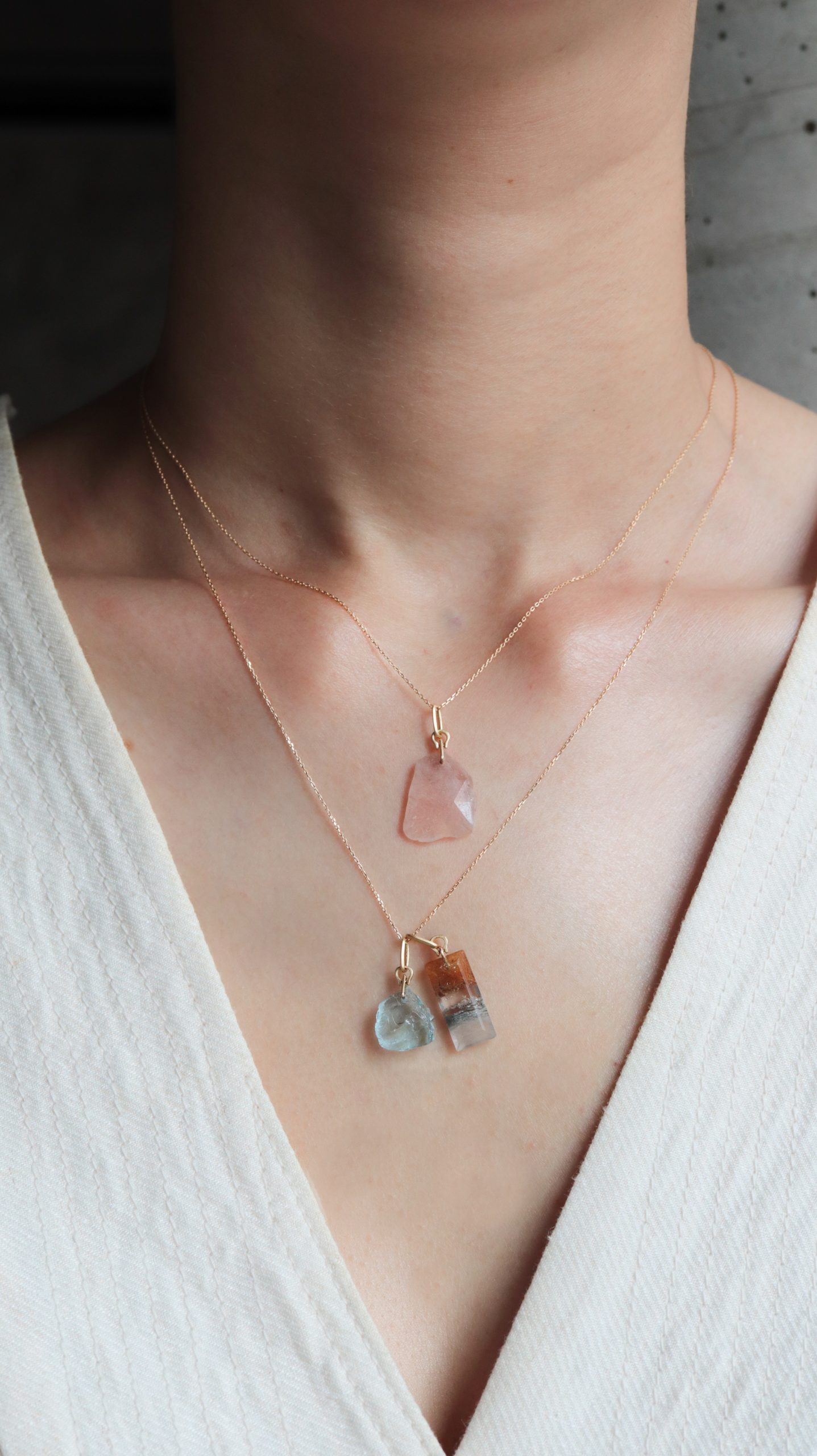
We recommend selecting the birthstone of yourself or a loved one, such as a family member, and wearing them layered like a talisman.
At this order event, we selected rough stones that are typical of MONAKA jewelry.ChaosWe offer loose stones selected with the image of rare natural birthstones.
<Date held>
Omotesando: Thursday, September 18th, 2025 - Thursday, September 25th, 2025
Yokohama: 2025/9/27 (Sat) - 10/1 (Wed))
<MONAKA jewelry>
Monaka represents the harvest moon and full moon.
The designers offer jewelry made with rare natural stones and diamonds that they have purchased from all over the world.
The brand's unique selection of stones is based on two perspectives: looking at gemstones as jewelry and looking at gemstones as a mineral lover.The brand's designs are characterized by the use of unique stones, carefully selected from unique materials and bringing out their characteristics.
Each piece is carefully handcrafted to be a treasured personal item that expresses the individual and can be cherished for a long time.
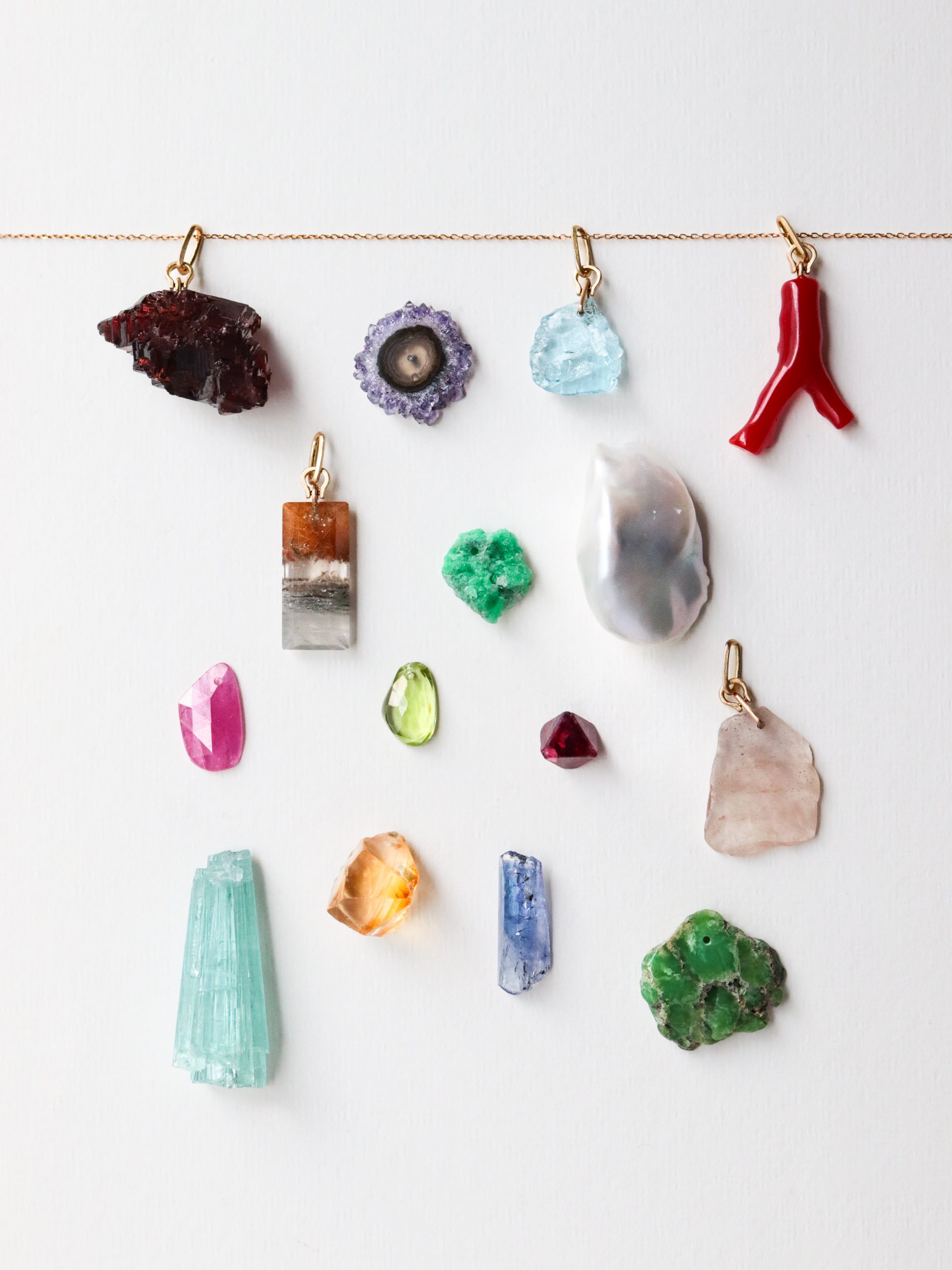
<Order Overview>
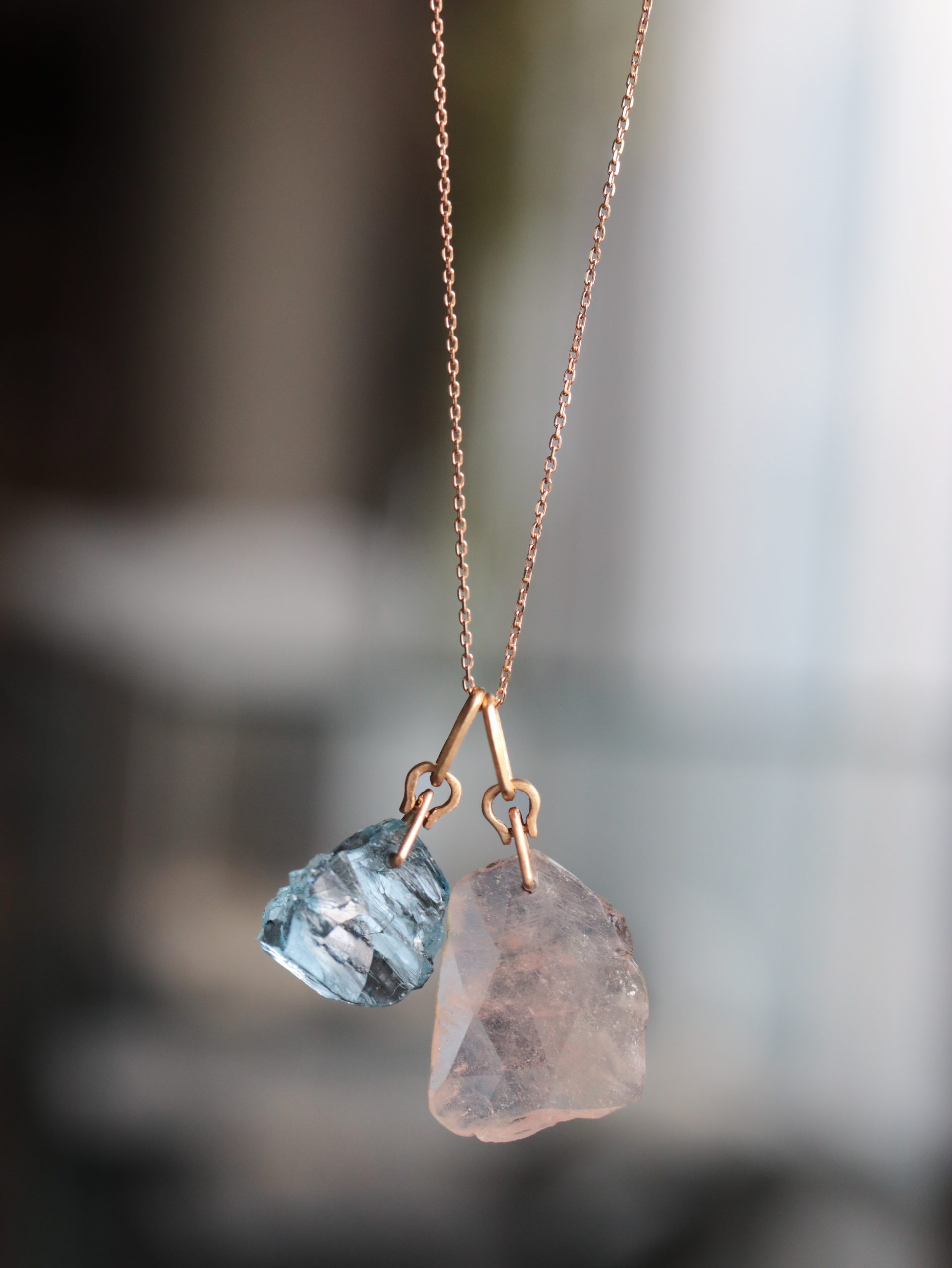
Choose your favorite birthstone from January to December, and in keeping with MONAKA's style, we will finish it with original parts that subtly incorporate a "Horse Shoe" motif into the bail to maximize the charm of the stone itself.
ChaosIt comes with a specially ordered 18K yellow gold chain with an adjuster. (Necklace 50cm)
*Delivery will be scheduled 3 months after your order.
Prices vary depending on the stone you choose, so please contact us for more information.
<Introduction to birthstones>
1月:ガーネット
Because its color resembles that of a pomegranate seed, it was named garnet after the Latin word "granatus," which means "seed," and is also called "garnet stone" in Japanese.
Garnet has a long history and appears in many legends, including Greek mythology and Jewish legend (it was used as a light to guide Noah's Ark to the continent).
In the Middle Ages, garnets were used as talismans for Crusaders, and it was said that receiving one as a gift would bring good luck.
This time we have selected a unique garnet, which has been deliberately left unpolished as a raw stone.
February: Amethyst
Purple quartz is called amethyst in Japanese. The purple color is caused by trace amounts of iron ions.
Amethyst is formed when hot water penetrates into the cooled and solidified bubbles of lava in geodes (cavities formed inside sedimentary rocks or igneous basalt rocks), evaporating the water and causing minerals to crystallize.
The history of amethyst dates back to pre-Christian times, and its name comes from ancient Greek mythology. Amethyst is mentioned in both the Old and New Testaments.
In the past, purple was difficult to produce artificially, so it was considered a noble and sacred color and was worn by royalty, aristocrats, and clergy.
This time we have selected unique loose stones with the geode and amethyst crystal parts intact.
March: アクアマリン
Aquamarine refers to the blue variety of the mineral beryl, the same mineral as emerald.
As its name suggests, it is a gemstone the color of the sea, and it is said that if it is thrown into the sea it will instantly dissolve. For this reason, ancient European sailors treasured this stone as a talisman that contained the power of the sea.
This time we have selected an aquamarine that is a loose, unpolished rough stone with a unique gradation and outline.
Coral
They are not minerals or trees, but rather jellyfish and sea anemones that belong to the phylum Cnidaria and class Anthozoa.
Since natural coral is created in nature, it is characterized by slight scratches and dents on the surface.
This is a different type of coral from the reef-building coral often found on shallow coasts, and the coral used for processing is harvested from the seabed at depths of 50m to 1000m.
It is said to have been used since the Paleolithic period, and has been loved all over the world, including as a lucky charm in ancient Greece and Rome and in rosaries in Christianity.
This time we have selected red coral, a popular coral with a unique, naturally formed branching pattern.
April: Quartz
It is a very common rock-forming mineral that makes up the Earth's crust, and many of them contain other minerals and liquids as inclusions.
In ancient India, quartz was believed to not only store energy but also transform it.
During the process of crystallization underground over a long period of tens of millions of years, rutile forms needle-like crystals that are pulled by the growth of the quartz and are encapsulated within it.
We have selected a unique quartz that has various inclusions, including needle-shaped rutile crystals and misty gray inclusions, that create a striped pattern.
May: エメラルド
Emerald refers to green beryl, and is one of the world's three most precious stones, along with ruby and sapphire.
Loved by great historical figures, including Cleopatra, its beauty has been believed to have various powers around the world, such as being a symbol of wealth and power, predicting the future, and acting as an antidote.
This time, we have selected emeralds that are unpolished and have a unique character, with a distinctive gradation and outline.
June: Freshwater baroque pearl
Pearls form inside freshwater oysters and are produced within the oyster's body, and are called biominerals.
One of the oldest known gemstones, pearls have been used since ancient times as a symbol of beauty and authority, and have been favored by royalty and aristocrats.
This time we have selected baroque pearls, which are popular for their unique beauty, one of a kind, as they are a coincidence created by nature and no two pearls are the same.
"Baroque" means "distorted" in Portuguese. During the pearl formation process, foreign matter adheres to the nucleus, changing its shape, and the pearl is formed to fit the shape.
July: ルビー
Ruby is one of the three most precious stones in the world, along with sapphire and emerald, and is extremely popular, earning it the nickname "Queen of Gems" due to its distinctive deep red color.
It is a type of corundum that has the same mineral composition as sapphire, but those that contain a lot of chromium (about 1%) are called "rubies."
The origin of ruby is older than that of diamond, and ruby appears in the Old Testament. Since ancient times, ruby has been treated as a stone that brings victory, enhances charisma, and is a symbol of power.
This time we have selected a rare rose-cut ruby with a chic vibrant pink and matte color scheme.
August: Spinel
The name comes from the Latin word "spina," meaning "thorn," and it occurs as an octahedral idiomorphic crystal. It is a rare stone, occurring in extremely limited areas and in very limited quantities.
It has been mistaken for a ruby for centuries, and the Black Prince's Ruby that is featured in the British coronation crown is actually a red spinel, not a ruby.
The science of gemology was born from distinguishing spinel from ruby.
This time we have selected raw spinel in its octahedral crystal form.
September: Sapphire
The bright red corundum is called ruby, and the rest are called sapphire. It is a gemstone that is chosen as one of the world's three most precious stones, along with ruby and emerald.
In ancient Greece and medieval Europe, sapphires were believed to be good for the eyes and an antidote to poison.
This time we have a selection of pale pink and colorless sapphires that have been sliced and rose-cut into rare outline rough stones.
October: Tourmaline
Tourmaline has a wide range of vibrant colors and is one of the most versatile gemstones. It has such a wide range of hues that it is said that "tourmaline has every color."
Tourmaline is the only mineral on Earth that can become electrically charged under certain conditions. It crystallizes in a trigonal crystal structure, and no other common mineral has three-sided prisms.
Tourmaline has a long history and has been treasured in various cultures since ancient times, but due to its diverse colors, it was long confused with other gemstones, and it was not until around the 15th century that tourmaline was rediscovered in the West.
This time we selected a refreshing blue-green tourmaline in its original columnar form.
November: Citrine
Amethyst (purple quartz) that crystallizes deep underground turns yellow due to thermal interference from magma, or quartz that turns yellow due to exposure to radiation; its Japanese name is yellow quartz.
Citrine has a bright yellow color reminiscent of sunlight, and since ancient times has been known as the "stone of business" and is said to have the power to attract wealth and prosperity.
This time we have selected citrine, a rough stone that has been deliberately left unpolished, with a unique gradation and outline.
12月:タンザナイト
Tanzanite is a pleochroic gemstone with a blue to blue-purple color and is a variety of zoisite.
Found only in one place on Earth, tanzanite is a relatively recent discovery.
In 1967, Tiffany & Co. named it "Tanzanite" in honor of Tanzania, where it was first discovered, after the color of the Tanzanian sky at dusk.It quickly became the center of attention as a mysterious gemstone with pleochroic properties that allow it to change color from blue to purple depending on the angle from which it is viewed.
This time, we deliberately selected unpolished rough stones in their original loose form.
タ ー コ イ ズ
Turquoise has a long history and has been prized in ancient Egypt, the Aztecs, Persia, Mesopotamia, the Indus Valley, and ancient China since the Shang Dynasty.
The ancient Egyptians called turquoise "mefkat," which also means "joy" or "delight."
This time we have selected Dameil turquoise, which is difficult to obtain due to the small size of the mine.
This is a distinctive stone that has a yellow-green color due to the zinc content and has increased hardness.It has a dark brown to black spider web pattern, and the balance with the outline of the raw stone makes it look like a flower.We have a special piece for you.
This will be a rare opportunity to pick up a product and create your own original piece, so we look forward to your visit.
<SHOP INFO>
Chaos OMOTESANDO
Address: 1F C&C Building, 4-10-5 Jingumae, Shibuya-ku, Tokyo 150-0001
Phone number: 03-6432-9277
Hours: 11: 00 ~ 20: 00
Chaos YOKOHAMA
Address: 3F New Man Yokohama, 1-1-1 Minamisaiwai, Nishi-ku, Yokohama, Kanagawa Prefecture, 220-0005
Telephone number: 045-534-5355
Business hours: Weekdays 11:00-20:00, Saturdays, Sundays, and holidays 10:00-20:00 *same as the building
![[PRE ORDER REPORT] JUNE by EC STAFF](https://www.elementrule.co.jp/blog/wp-content/uploads/2026/05/by_main_260515_blog_e.jpg)
![[Month of 5]ChaosEvent schedule](https://www.elementrule.co.jp/blog/wp-content/uploads/2026/05/EVENT-SCHEDULE_5_7_SNS-2.jpg)